
Introduction
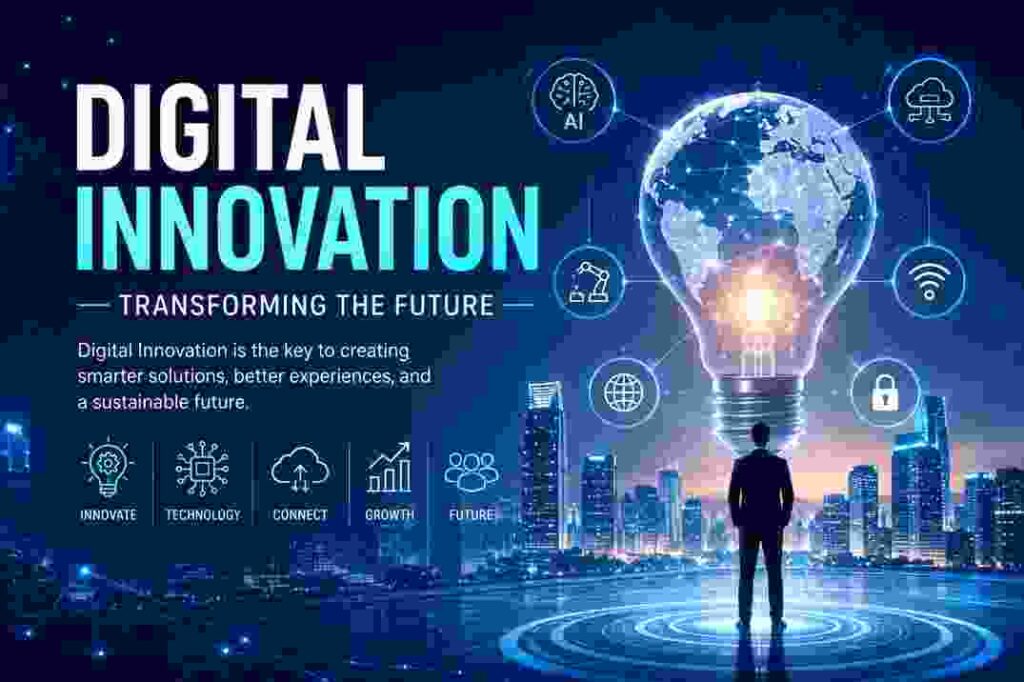
Digital innovation has become one of the most powerful forces shaping the modern world. From smartphones and cloud computing to artificial intelligence and blockchain, technology is rapidly transforming the way people live, work, communicate, and conduct business. Organizations across every industry are embracing digital innovation to improve efficiency, enhance customer experiences, and remain competitive in an increasingly technology-driven marketplace.
The term “digital innovation” refers to the use of digital technologies to create new or improved business processes, products, services, and customer experiences. It combines creativity, technology, and strategic thinking to solve problems and generate value. Businesses today are not only using technology to automate tasks but also to rethink traditional models and develop entirely new opportunities.
In recent years, digital innovation has accelerated dramatically due to the growth of the internet, mobile devices, cloud services, and data analytics. Companies such as Amazon, Google, Apple, and Microsoft have transformed industries by leveraging innovative technologies. At the same time, small businesses and startups are using digital tools to compete on a global scale.
This article explores the meaning of digital innovation, its importance, key technologies, applications across industries, benefits, challenges, and future trends that are shaping the digital era.
Understanding Digital Innovation
Digital innovation involves integrating digital technologies into products, services, and operations to create value. Unlike traditional innovation, which may focus only on physical products or manual systems, digital innovation relies heavily on software, data, automation, and connectivity.
Digital innovation can take many forms, including:
- Creating mobile applications for customer engagement
- Using artificial intelligence for smarter decision-making
- Implementing cloud computing for remote collaboration
- Automating repetitive tasks with robotics
- Developing online platforms for e-commerce
- Improving communication through social media and digital marketing
At its core, digital innovation is about using technology creatively to improve performance and adapt to changing market demands.
Importance of Digital Innovation
Digital innovation is essential for organizations and societies because it drives progress and competitiveness. Businesses that fail to innovate digitally often struggle to survive in rapidly changing markets.
Enhancing Customer Experience
Customers today expect fast, personalized, and convenient services. Digital innovation enables companies to meet these expectations through online shopping, chatbots, mobile banking, personalized recommendations, and digital support systems.
For example, streaming platforms such as Netflix use advanced algorithms to recommend content based on user preferences. Similarly, online retailers provide personalized product suggestions and seamless payment systems.
Increasing Efficiency
Automation and digital tools help organizations reduce manual work, minimize errors, and improve productivity. Businesses can automate inventory management, payroll systems, customer service, and data analysis.
This increased efficiency saves time and reduces operational costs while allowing employees to focus on strategic tasks.
Supporting Business Growth
Digital innovation opens new revenue streams and market opportunities. Companies can expand globally through e-commerce platforms and digital marketing. Small businesses can now reach international audiences without needing physical stores in every country.
Encouraging Creativity and Collaboration
Digital technologies encourage collaboration among teams regardless of location. Cloud-based tools such as Google Workspace and Microsoft Teams enable remote work and communication.
Innovation also promotes creative thinking by providing tools for experimentation, prototyping, and testing new ideas.
Improving Decision-Making
Organizations collect massive amounts of data every day. Digital innovation allows businesses to analyze this data using analytics and artificial intelligence. As a result, leaders can make informed decisions based on customer behavior, market trends, and operational performance.
Key Technologies Driving Digital Innovation
Several technologies are at the center of digital innovation. These technologies continue to evolve and reshape industries worldwide.
Artificial Intelligence (AI)

Artificial intelligence is one of the most transformative technologies of the modern era. AI systems can analyze data, recognize patterns, make predictions, and even simulate human intelligence.
Applications of AI include:
- Virtual assistants like Siri and Alexa
- Chatbots for customer service
- Fraud detection in banking
- Predictive analytics in healthcare
- Autonomous vehicles
- Recommendation systems in e-commerce
AI improves efficiency, accuracy, and customer experiences while enabling businesses to automate complex processes.
Cloud Computing
Cloud computing allows organizations to store and access data and applications over the internet instead of relying on local servers.
Benefits of cloud computing include:
- Reduced infrastructure costs
- Scalability and flexibility
- Remote accessibility
- Improved collaboration
- Data backup and disaster recovery
Cloud services have become essential for remote work, online learning, and digital businesses.
Internet of Things (IoT)
The Internet of Things refers to interconnected devices that collect and exchange data through the internet.
Examples include:
- Smart home devices
- Wearable fitness trackers
- Smart factories
- Connected vehicles
- Smart agriculture systems
IoT improves monitoring, automation, and efficiency across industries.
Blockchain Technology
Blockchain is a secure and decentralized digital ledger technology. It is widely known for supporting cryptocurrencies such as Bitcoin, but its applications go beyond finance.
Blockchain is used for:
- Secure financial transactions
- Supply chain transparency
- Digital identity verification
- Smart contracts
- Healthcare data security
The technology increases transparency, security, and trust in digital systems.
Big Data and Analytics
Organizations generate enormous amounts of data every day. Big data analytics helps businesses analyze and interpret this information to gain insights.
Data analytics supports:
- Customer behavior analysis
- Market trend forecasting
- Operational improvements
- Personalized marketing
- Risk management
Companies that effectively use data analytics gain a significant competitive advantage.
Robotics and Automation
Automation technologies and robotics are transforming manufacturing, logistics, and customer service.
Robotic systems can:
- Assemble products
- Manage warehouses
- Deliver goods
- Perform surgeries
- Handle repetitive office tasks
Automation improves speed, precision, and productivity.
Applications of Digital Innovation Across Industries
Digital innovation affects nearly every sector of society. Different industries are using technology in unique ways to improve services and operations.
Digital Innovation in Healthcare
Healthcare has experienced major improvements through digital innovation.
Telemedicine
Patients can now consult doctors remotely through video calls and online platforms. Telemedicine improves access to healthcare, especially in rural areas.
Electronic Health Records
Hospitals and clinics use digital records to store patient information securely and improve communication between healthcare providers.
AI in Diagnosis
Artificial intelligence assists doctors in diagnosing diseases more accurately and quickly.
Wearable Devices
Smartwatches and health trackers monitor heart rate, sleep patterns, and physical activity.
Digital innovation in healthcare improves patient outcomes, efficiency, and accessibility.
Digital Innovation in Education
Technology has transformed education significantly.
Online Learning
Students can access courses and educational content from anywhere in the world.
Virtual Classrooms
Video conferencing tools support remote learning and collaboration.
Interactive Learning
Educational apps, simulations, and virtual reality make learning more engaging.
Personalized Education
AI-powered systems adapt learning materials based on student performance and needs.
Digital innovation makes education more accessible, flexible, and personalized.
Digital Innovation in Business
Businesses are embracing digital transformation to improve competitiveness.
E-Commerce
Online shopping platforms allow businesses to sell products globally.
Digital Marketing
Social media, SEO, and online advertising help companies reach target audiences effectively.
Customer Relationship Management (CRM)
CRM systems help businesses manage customer interactions and improve customer satisfaction.
Remote Work Solutions
Digital tools enable employees to work from home efficiently.
Business innovation increases productivity, profitability, and customer engagement.
Digital Innovation in Banking and Finance
The financial sector has rapidly adopted digital technologies.
Mobile Banking
Customers can transfer money, pay bills, and manage accounts through mobile apps.
Digital Payments
Online payment systems and digital wallets provide convenient transactions.
FinTech Solutions
Financial technology companies offer innovative services such as peer-to-peer lending and automated investing.
Cybersecurity
Banks use advanced security systems to protect customer data and transactions.
Digital innovation improves convenience, security, and financial inclusion.