Introduction
Generative AI is one of the fastest-growing technologies in the world. It allows computers to create new content instead of simply analyzing existing information. Today, businesses, students, developers, designers, and marketers use Generative AI to produce text, images, videos, music, and computer code. As a result, work becomes faster, more creative, and more efficient.
The popularity of Generative AI continues to grow because it helps people save time and improve productivity. Moreover, many industries now rely on AI-powered tools to automate tasks and deliver better customer experiences. Therefore, understanding Generative AI has become essential for anyone interested in modern technology.
What Is Generative AI?
Generative AI is a branch of Artificial Intelligence that creates new content based on the information it has learned from large datasets. Unlike traditional AI, which focuses on analyzing or predicting data, Generative AI produces original outputs such as articles, images, videos, audio, software code, and digital designs.
For example, a Generative AI system can write a blog post, generate artwork, create music, answer questions, or help developers write programming code. Consequently, it supports both creative and technical tasks.
History of Generative AI
The development of Generative AI began with advances in machine learning and neural networks. Early AI systems focused on solving simple problems and recognizing patterns. However, researchers continued to improve AI models over time.
Later, deep learning made it possible for AI to understand language, recognize images, and generate realistic content. Today, powerful AI models can create high-quality text, images, videos, and software applications. As a result, Generative AI has become a major part of digital transformation.
How Generative AI Works
Generative AI works by learning from large amounts of data. First, developers train AI models using books, articles, images, videos, and other digital content. Next, the model identifies patterns and relationships within the data. After that, it uses those patterns to generate new content based on user instructions.
Modern AI models improve through continuous training and optimization. Therefore, they produce more accurate and natural responses over time.
Core Technologies Behind Generative AI
Machine Learning
Machine Learning allows AI systems to learn from data without being directly programmed. Consequently, the system becomes more accurate as it processes additional information.
Deep Learning
Deep Learning uses artificial neural networks with multiple layers to understand complex patterns. As a result, AI can generate realistic text, images, and audio.
Natural Language Processing (NLP)
Natural Language Processing enables AI to understand human language. Therefore, users can communicate with AI using everyday language instead of technical commands.
Large Language Models (LLMs)
Large Language Models are trained on massive collections of text. They help Generative AI understand context, answer questions, summarize information, and create high-quality written content.
Types of Generative AI
Generative AI can produce different forms of digital content.
Text Generation
AI creates articles, emails, reports, product descriptions, and social media posts.
Image Generation
AI creates digital artwork, marketing graphics, illustrations, and realistic images from text descriptions.
Video Generation
AI produces videos, animations, presentations, and visual effects with minimal manual work.
Audio Generation
AI generates music, speech, voiceovers, podcasts, and sound effects.
Code Generation
Developers use AI to write programming code, detect errors, explain complex functions, and improve software development.
Benefits of Generative AI
Generative AI offers many advantages across different industries.
Saves Time
AI completes content creation much faster than manual methods. Therefore, users finish projects more efficiently.
Improves Productivity
Businesses automate repetitive tasks with AI tools. As a result, employees focus on higher-value work.
Supports Creativity
AI helps writers, designers, musicians, and marketers generate fresh ideas. Moreover, it speeds up the creative process.
Reduces Costs
Automation lowers operational expenses while improving business efficiency.
Better Customer Support
Companies use AI chatbots to answer customer questions at any time. Consequently, customers receive faster assistance.
Applications of Generative AI
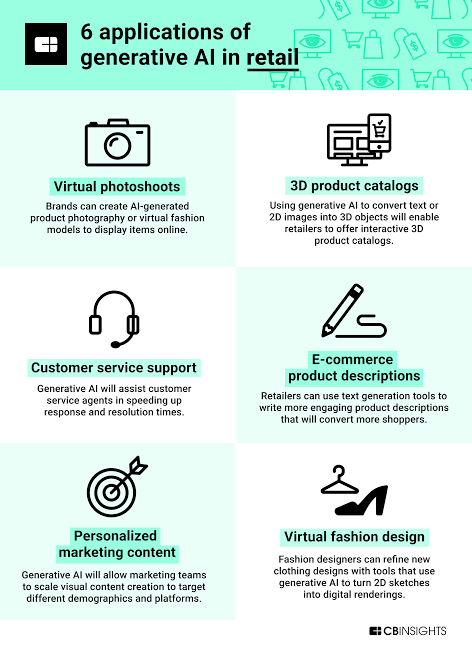
Generative AI supports many industries.
Healthcare
Doctors use AI to assist with medical research, summarize records, and improve patient care.
Education
Students use AI for learning, writing assistance, language practice, and research. Likewise, teachers create educational materials more quickly.
Business
Companies generate reports, marketing campaigns, presentations, and customer communications with AI.
Software Development
Developers write code, fix bugs, generate documentation, and improve productivity using AI tools.
Marketing
Marketing teams create blog posts, advertisements, product descriptions, and social media content faster than ever.
Finance
Financial institutions use AI to analyze reports, detect fraud, and improve customer service.
Entertainment
Film studios, game developers, and music producers use AI to create digital content and special effects.
Popular Generative AI Tools
Several AI tools are widely used today.
- ChatGPT
- Google Gemini
- Claude
- Microsoft Copilot
- Midjourney
- Adobe Firefly
- GitHub Copilot
- Runway
- DALL·E
- Stable Diffusion
Each tool focuses on different tasks such as writing, coding, image creation, design, or video generation.
Challenges of Generative AI
Although Generative AI provides many benefits, it also creates challenges.
AI-generated content may sometimes contain inaccurate information. Therefore, users should verify important facts. In addition, copyright, privacy, and data security remain important concerns. Furthermore, organizations should establish responsible AI policies before implementing these technologies.
Future of Generative AI
The future of Generative AI looks very promising. AI models continue to become more powerful, accurate, and efficient. Moreover, businesses are investing heavily in AI-powered automation and digital transformation.
In the coming years, Generative AI will improve healthcare, education, software development, finance, marketing, manufacturing, and scientific research. As a result, professionals across many industries will use AI as a daily productivity tool rather than a replacement for human creativity.
Best Practices for Using Generative AI
Users should provide clear instructions to receive better results. They should also review AI-generated content before publishing it. In addition, businesses must protect sensitive information and follow ethical AI guidelines. Finally, combining human expertise with AI leads to the best outcomes.
Conclusion
Generative AI is transforming the way people create content, solve problems, and work with technology. It generates text, images, videos, music, and computer code while improving productivity and encouraging innovation.
As the technology continues to evolve, Generative AI will become an essential part of modern business, education, healthcare, and everyday life. Therefore, learning how to use Generative AI effectively is an important step toward success in the digital age.