Introduction
Construction technology news highlights the latest innovations changing how buildings, roads, bridges, and infrastructure projects are designed and built. From artificial intelligence to advanced robotics, new technologies are helping construction companies improve productivity, manage costs, and reduce waste.
Today, the construction industry is becoming more digital and connected. As a result, contractors, engineers, architects, and property developers are exploring smarter ways to complete projects. Understanding these developments can help businesses prepare for future challenges and opportunities.
What Is Construction Technology News?
Construction technology news covers new tools, software, equipment, materials, and methods used in the construction industry. It includes developments in project management, building design, automation, safety, and sustainable construction.
For example, companies are adopting digital modeling tools to identify design problems before construction begins. Similarly, some contractors use drones to inspect sites and track project progress.
By following construction technology news, professionals can discover emerging solutions and understand how these innovations may affect their work.
10 Major Construction Technology Trends
1. Artificial Intelligence in Construction
Artificial intelligence (AI) is becoming an important part of modern construction. AI-powered software can analyze project information, identify patterns, and help teams make better decisions.
For instance, predictive analytics can help project managers identify possible delays. In addition, AI tools can review schedules, estimate resource requirements, and highlight potential safety concerns.
However, AI results depend on the quality of the information provided. Human expertise remains essential when making important engineering and construction decisions.
2. Building Information Modeling
Building Information Modeling, commonly known as BIM, creates detailed digital representations of buildings and infrastructure. These models can include information about structural components, electrical systems, plumbing, and materials.
BIM allows architects, engineers, and contractors to collaborate using shared project information. Consequently, teams can identify design conflicts before they become expensive problems on site.
Furthermore, BIM can support planning, cost estimation, maintenance, and facility management throughout a building’s life cycle.
3. Construction Robotics and Automation
Robotics is helping automate selected construction tasks. Depending on the equipment, robots may assist with bricklaying, concrete finishing, demolition, material handling, or repetitive site operations.
Automation can improve consistency and reduce workers’ exposure to certain hazardous tasks. Nevertheless, these systems require proper setup, maintenance, and trained operators.
As the technology develops, construction companies will need to evaluate whether robotic equipment provides enough value for their project requirements.
4. 3D Printing in Construction
Three-dimensional printing is attracting attention because it can produce selected building components and, in some applications, entire building structures.
The process uses specialized equipment to place construction materials in programmed layers. Depending on the project, this approach may reduce material waste and provide greater design flexibility.
However, 3D-printed construction still faces challenges involving building codes, material performance, equipment costs, and large-scale adoption. Its suitability depends on local regulations and project conditions.
5. Drones for Site Monitoring
Drones are increasingly used to capture aerial images and collect information about construction sites. They can help teams inspect large areas, document progress, and monitor difficult-to-reach locations.
When combined with mapping software, drone data can support site measurements and comparisons between planned and actual progress.
Moreover, regular aerial surveys can improve communication between project managers and stakeholders. Operators must still follow applicable aviation, privacy, and safety requirements.
6. Internet of Things and Smart Sensors
The Internet of Things (IoT) connects devices that collect and exchange information. On construction sites, sensors can monitor equipment conditions, environmental factors, material storage, and selected safety indicators.
For example, equipment sensors may help maintenance teams identify unusual operating conditions before a major failure occurs.
Similarly, environmental sensors can track temperature, humidity, and other factors that affect certain construction processes.
Although connected devices can improve visibility, companies must also protect their systems from unauthorized access and manage the data they collect responsibly.
7. Sustainable Construction Technology
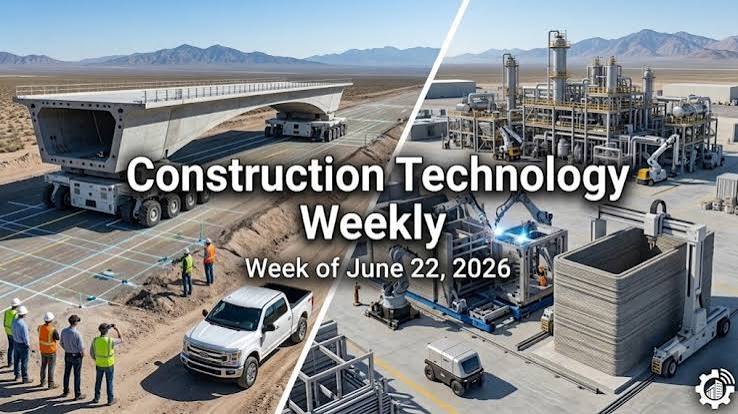
Sustainable construction focuses on reducing environmental impacts while maintaining safety, durability, and performance.
New approaches include low-carbon concrete, recycled materials, energy-efficient building systems, and improved insulation. Some projects also use digital tools to estimate material quantities and reduce unnecessary waste.
In addition, better energy modeling can help designers understand how a building may perform before it is constructed.
The best solution depends on local climate, material availability, building regulations, and the expected life of the structure.
8. Augmented and Virtual Reality
Augmented reality (AR) and virtual reality (VR) provide new ways to review construction designs and train workers.
VR can place users inside a digital representation of a building before work begins. This allows project teams to examine layouts and discuss possible design changes.
Meanwhile, AR can overlay digital information onto a real-world view, depending on the device and software being used.
These technologies can improve visualization and communication, although accurate models and suitable equipment are necessary for useful results.
9. Advanced Construction Materials
Material innovation is another important subject in construction technology news. Researchers and manufacturers are developing materials designed to improve strength, durability, energy efficiency, or environmental performance.
Examples include advanced insulation, recycled construction products, engineered timber, and specialized concrete formulations.
Some materials may offer significant benefits in particular environments. However, they must be evaluated for structural performance, fire safety, durability, cost, and compliance with local building standards.
Therefore, construction teams should review technical documentation before adopting unfamiliar products.
10. Cloud-Based Construction Management
Cloud-based software allows project teams to access shared documents, schedules, budgets, and reports through connected devices.
This can reduce confusion caused by outdated drawings or separate information systems. In addition, cloud platforms can support communication between office staff, contractors, suppliers, and site teams.
Some platforms also include cost tracking, task assignments, progress reports, and document approval workflows.
To choose the right system, companies should consider usability, data security, integration with existing tools, and subscription costs.
How Construction Technology Improves Project Management
Modern construction tools can improve several parts of project management.
First, digital scheduling helps teams organize tasks and monitor deadlines. Second, cost estimation software can make budgets easier to review and update. Third, digital documentation can improve communication and reduce the risk of teams working from outdated information.
In addition, project dashboards may help managers identify delays or cost increases earlier.
However, technology alone cannot guarantee successful results. Clear responsibilities, realistic planning, skilled workers, and effective communication remain essential.
Benefits of Adopting Construction Technology
Construction technology can provide several benefits when implemented correctly.
- Improved productivity: Digital tools can reduce repetitive administrative work.
- Better coordination: Shared project information helps teams collaborate.
- Stronger safety planning: Selected technologies can help identify hazards and monitor site conditions.
- More accurate estimates: Digital models and project data can support cost planning.
- Reduced waste: Better measurements and material planning can limit unnecessary consumption.
- Improved visibility: Digital reports can help managers understand project progress.
Even so, benefits vary according to the technology, project size, workforce skills, and quality of implementation.
Challenges Facing Construction Technology Adoption
Despite its potential, technology adoption can be difficult for construction businesses.
Initial Costs
Equipment, software subscriptions, training, and integration can require significant investment. Smaller contractors may need to introduce new tools gradually.
Training Requirements
Employees need suitable training to use digital systems effectively. Without it, expensive technology may not deliver its expected benefits.
Resistance to Change
Some teams prefer familiar working methods. Therefore, managers should explain the purpose of new tools and demonstrate how they support daily tasks.
Data Security
Connected systems may store sensitive project information. Businesses should use appropriate access controls, software updates, backups, and security procedures.
Compatibility Issues
Different software platforms do not always exchange information smoothly. Companies should check compatibility before committing to a new system.
How to Choose the Right Construction Technology
Selecting technology requires more than following industry trends. Companies should start by identifying their biggest operational problems.
For example, a contractor struggling with document coordination may benefit from cloud-based project management. A company managing large sites may consider drone surveys or digital mapping.
Next, compare the total cost, training requirements, technical support, and expected benefits. Where possible, test the technology on a smaller project before expanding its use.
Finally, measure results using practical indicators such as time saved, fewer errors, reduced waste, and improved reporting.
The Future of Construction Technology
The future of construction will likely involve greater integration between digital design, connected equipment, automation, and data analysis.
AI may support planning and risk identification, while BIM and cloud platforms can improve coordination. Meanwhile, robotics and advanced materials may change how selected construction tasks are performed.
Sustainability is also expected to remain an important consideration as developers look for ways to improve energy performance and reduce environmental impacts.
However, adoption will vary across countries and businesses. Regulations, labor availability, infrastructure, investment, and local conditions will influence which technologies become common.
Following reliable construction technology news can help industry professionals understand these changes and make informed decisions.
Frequently Asked Questions
What is construction technology news?
Construction technology news reports on new tools, materials, software, equipment, and methods that affect building and infrastructure projects.
What are the latest construction technology trends?
Important areas include AI, BIM, robotics, 3D printing, drones, IoT sensors, sustainable materials, AR and VR, and cloud-based construction management.
How does AI help the construction industry?
AI can help analyze project data, identify potential risks, support scheduling, and improve certain estimation and planning tasks. Its results should be reviewed by qualified professionals.
Is construction technology expensive?
Costs vary considerably. Some software tools offer affordable entry-level plans, while robotics and specialized equipment may require substantial investment.
Why is sustainable construction technology important?
It can help reduce material waste, improve energy efficiency, and support lower-impact building practices when suitable solutions are selected and implemented correctly.
How can professionals stay updated on construction technology news?
They can follow reputable industry publications, professional associations, manufacturer announcements, research institutions, and construction technology conferences.
Conclusion
Construction technology news provides valuable insight into the innovations reshaping the building and infrastructure sectors. AI, BIM, robotics, drones, advanced materials, and cloud software are creating new ways to plan and deliver projects.
Nevertheless, successful adoption requires careful evaluation, appropriate training, and attention to safety and regulations. By focusing on practical needs rather than trends alone, construction businesses can select technologies that support better coordination, productivity, and long-term performance.